Steel Door Selection: Security, Insulation & Design Guide
Choosing a steel door is not merely a decoration decision that determines the appearance of an entry area. The door’s security level, sound and thermal insulation, usage habits, maintenance requirements, and the building’s overall design should be evaluated together. A steel door selected with the right measurements and features can provide long-term comfort at a residential entrance.
Steel Door Structure and Essential Components
A steel door consists of a metal body, supporting frame, door leaf, door frame, hinges, and locking components designed to provide resistance against external effects. The compatibility of these parts is as important as the quality of each individual component. Deciding based only on the door leaf may cause you to overlook the effects of the frame, hinges, or installation on performance.
The thickness of the steel sheet used in the door body and the reinforcements in the internal structure are evaluated in terms of resistance to forced entry. However, a thicker material alone is not always sufficient. The door’s dimensions, weight, frame connection, hinge structure, and how it is secured to the wall should be considered together.
The infill material inside the door leaf also affects its performance. Infill materials such as polyurethane or rock wool can contribute to the door’s sound and thermal insulation. A structure designed together with perimeter seals and the threshold can help reduce air and sound transmission when the door is closed.
What Security Features Should Be Examined?
The first consideration when choosing a steel door is the extent to which the door can protect the entry area. In addition to the strength of the door leaf, the lock system, cylinder, frame, and hinge connections should also be examined. To determine a security level appropriate for the intended use, consider whether the door will be used at a residential entrance, in a shared-use area, or at a more controlled access point.
Multi-point locking systems can secure the door leaf not only at a single point but also at the top, bottom, and sides. This structure can help the door sit more evenly within the frame and increase resistance to forced entry. When evaluating the lock system, consider not only key use but also cylinder replaceability, spare key management, and ease of daily use.
Hinges are important for security as well as for enabling the door to move. Reinforced hinge connections and security pins can help the door leaf integrate more securely with the frame when the door is closed. Therefore, when examining a product, obtain information not only about the number of hinges but also about their load capacity, connection method, and compatibility with the frame.
If you have specific expectations such as fire resistance, smoke tightness, or a particular security class, these features should be clarified separately before ordering. Do not assume that every steel door has the same technical specifications; the required performance should be evaluated together with the selected model and application conditions.
What Should You Consider for Sound and Thermal Insulation?
An entry door is one of the transition points between the outdoors and the interior. The infill inside the door leaf, the seals around the frame, and the threshold play a decisive role in sound, air, and heat transmission. Therefore, instead of looking only at the door’s exterior surface or decorative finish, ask how the insulation layers are constructed.
The internal infill structure of the door leaf and the perimeter sealing system become especially important at entrances exposed to heavy outside noise. Solutions using double seals can help close the gaps between the door and the frame more effectively. However, insulation performance is also affected by factors such as the wall structure, installation of the door frame, and application of the threshold detail.
For thermal insulation, the door must not allow air leakage when closed, the leaf must fit the frame properly, and the seals must not become deformed over time. Signs such as the door rubbing against the floor when opened, a gap remaining when closed, or difficulty turning the lock may indicate that adjustment or installation inspection is required.
Users with high sound and thermal insulation expectations should obtain detailed information about the internal infill, seal structure, threshold solution, and installation method when selecting a product. This allows them to make a decision based not only on the material name but also on how the door functions as a whole.
Choosing a Steel Door Based on the Area of Use
When choosing a steel door for a residential entrance, the architectural character of the building and the intensity of daily use should be evaluated together. At entrances directly exposed to the outdoors, the suitability of the surface for environmental conditions becomes more important, while at protected building entrances, compatibility with the interior design and ease of use may be more decisive.
At villa entrances, it is important for the door to complement the facade, flooring, and other wood elements in the interior. At wide entrances, the door dimensions, surrounding fixed walls, and any adjacent fixed panels should be planned together. In narrow areas, the opening direction, handle position, and clearance should be checked in advance for everyday use.
At heavily used shared entrances, cleanability of the surface, practicality of the lock system, and durability of the hardware may be priorities. At private residential entrances used less frequently, design, insulation, and security expectations can be considered together. Therefore, one type of steel door should not be expected to provide the same result in every area of use.
You can review steel door models when comparing different design and surface options. The important point is not only appearance but also whether the door is suitable for the measurements, area of use, and installation conditions.
Choosing Between Composite and Laminoks Surfaces
The exterior appearance of a steel door plays an important role in the overall design of an entrance. Composite and Laminoks surfaces are options that can meet different texture and color expectations. When making a selection, consider not only the catalog image but also the light on the facade where the door is located, the surrounding materials, and the visual relationship with the interior.
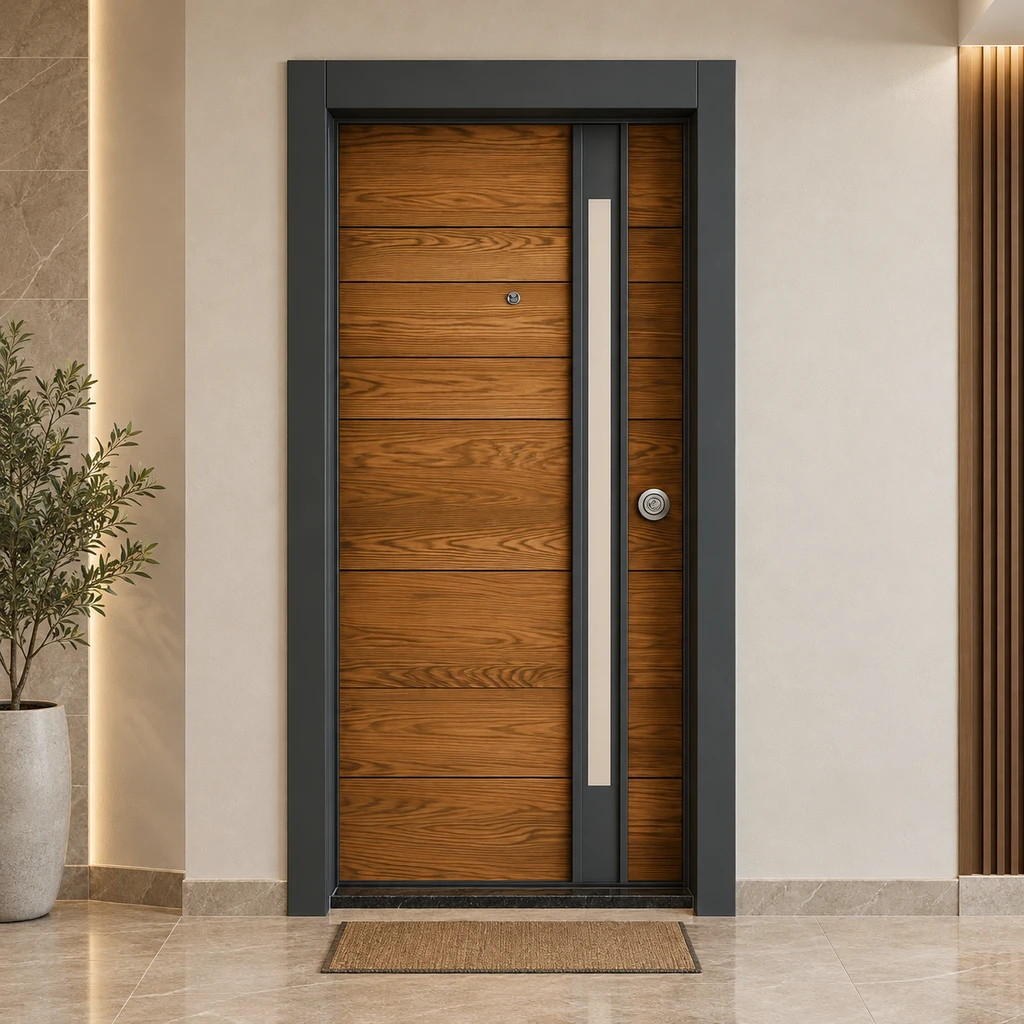
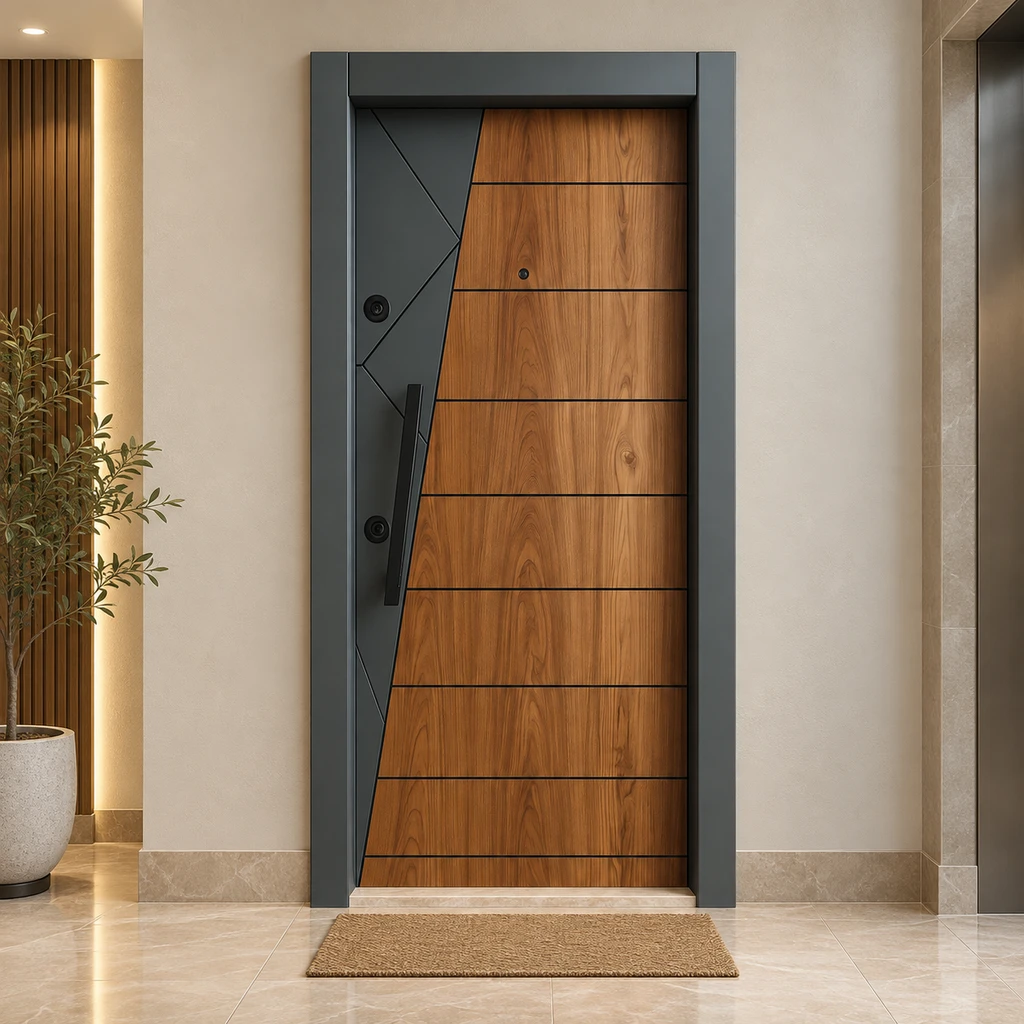
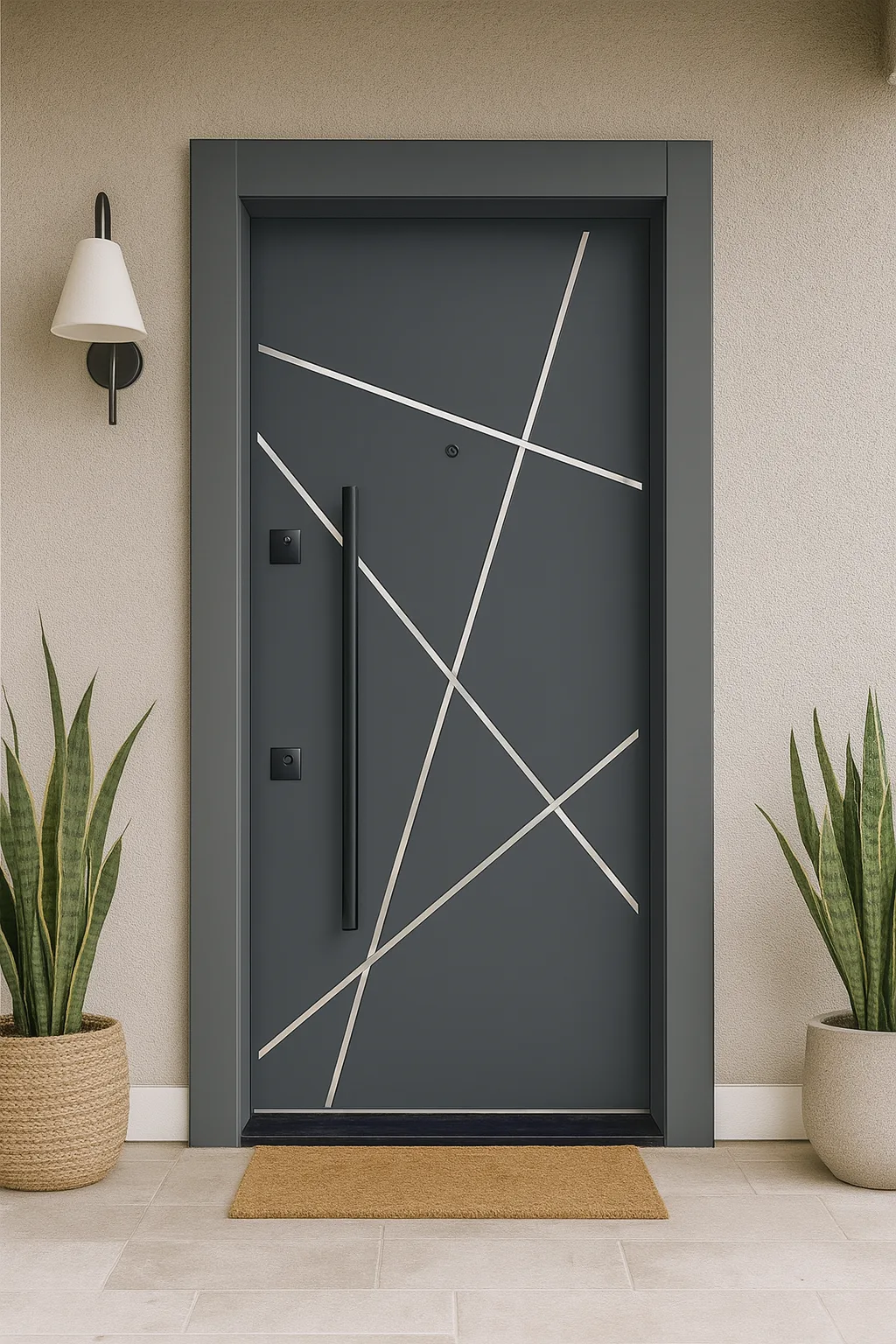
Composite steel doors can be considered by users who want to create different design effects on the surface and make the door’s exterior appearance compatible with the architectural style. When determining the color, texture, and panel arrangement, consider the walls, flooring, and lighting conditions around the door.
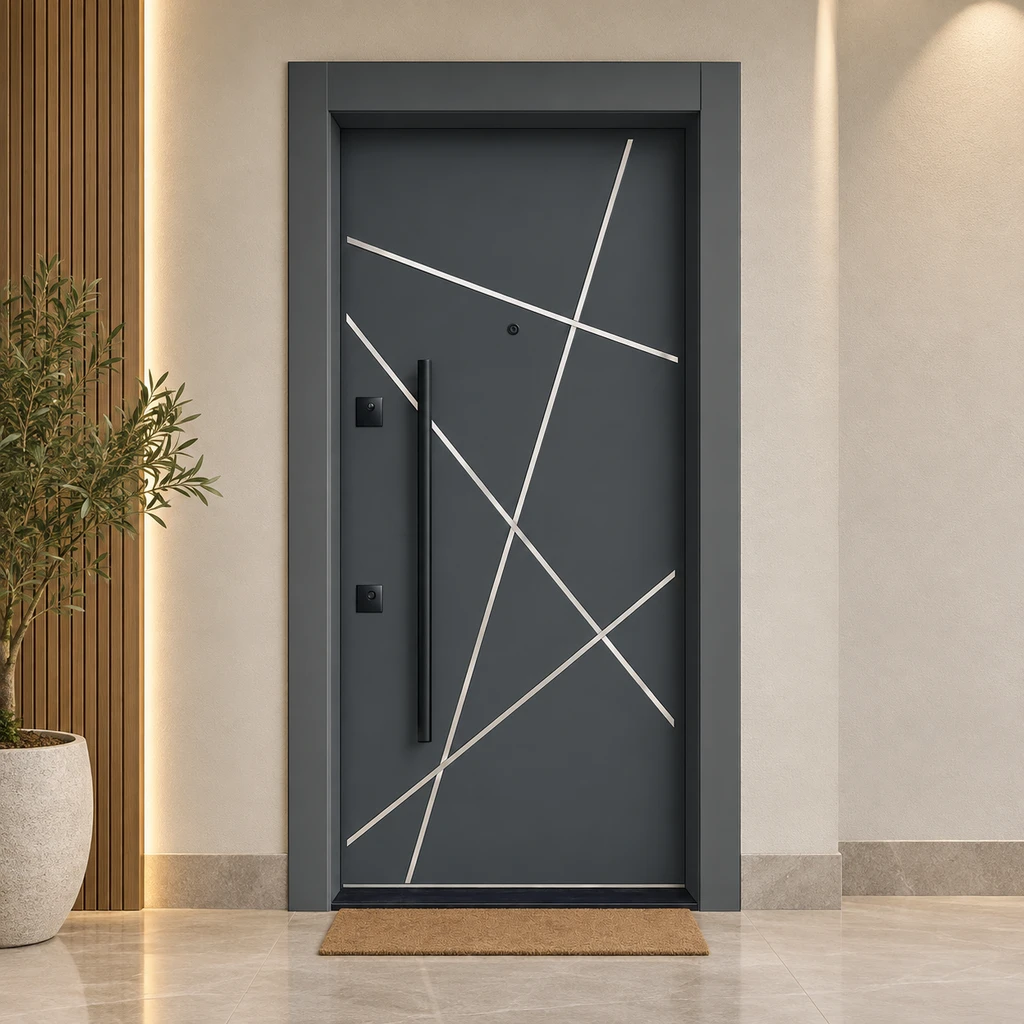
Laminoks steel doors can offer an alternative for those who prefer designs that emphasize metallic or distinctive surface characteristics. The interior surface of the door may have a different character from the exterior surface; therefore, evaluating it together with the interior hallway, entryway, and any interior doors during selection will produce more consistent results.
For color selection, a RAL color chart can be used for lacquered surfaces, while a collection color chart can be used for wood and laminate surfaces. Because small differences may occur between the color chart and the actual surface depending on lighting conditions, selection should be made from a physical sample whenever possible.
Usage Recommendations for Maintenance and Longevity
To use a steel door without problems for a long time, avoid placing excessive load on the door leaf during daily use, and do not force the handle or lock. If the door rubs against the floor while closing, the lock tongue does not fully enter the strike plate, or resistance occurs when turning the key, it should be inspected before the problem becomes more serious.
For surface cleaning, use soft, non-abrasive materials suitable for the production surface. Hard sponges, products containing solvents, or unsuitable cleaning chemicals can cause scratches, color changes, or deterioration of the finish. Areas that come into contact with water should be dried after cleaning.
Moving or time-sensitive components such as hinges, locks, and seals should be visually inspected at regular intervals. If the seals become hard, tear, or come out of place, the door’s insulation performance may decline. Because unauthorized modifications to the product may affect its operation and warranty coverage, any intervention should be performed by a professional team.
Steel doors are covered by a two-year manufacturer's warranty against manufacturing defects. User error, impact, contact with water, unsuitable cleaning materials, and unauthorized intervention may be excluded from warranty coverage. Therefore, it is important to follow the product’s technical specifications during installation, cleaning, and maintenance.
Common Mistakes When Choosing a Steel Door
One of the most common mistakes is choosing a door based only on its appearance. An impressive surface design may not provide the expected ease of use when combined with inadequate measurements or unsuitable installation. Similarly, focusing only on sheet thickness overlooks the importance of the lock, frame, hinges, and insulation components.
Another mistake is sharing approximate measurements or assuming that the measurements of the existing door are directly sufficient for the new door. The wall opening, frame dimensions, floor level, opening direction, and fixed areas around the door should be evaluated together. If made-to-measure production is planned, these details must be clarified before the order is approved.
Leaving shipping and installation conditions until the final stage can also cause problems. For products requiring installation, the area must be cleared before application. If dents, tears, or wetness are found on the packaging during delivery, have the transport representative prepare a damage report before accepting the product.
Made-to-Measure Preparation at Decorege
Decorege steel doors can be planned according to the dimensions of the area and design expectations. Since most products are prepared to order, color, dimensions, frame, and accessory options are determined according to the project conditions. Free on-site surveys and on-site measurement services are offered in certain regions, while other addresses can proceed based on information shared using the measurement guide.
After the measurement and selection details are clarified, the door’s surface, color, lock, frame, and accessory details are evaluated. For products requiring installation, the application is carried out by the Decorege team or an authorized installer. Clearing the entrance area before installation helps the application proceed in a more organized and safe manner.
The goal when choosing a steel door is to bring security, insulation, ease of use, and design together in a single evaluation. Once the needs and measurements are clarified, a solution suitable for the building can be selected from composite steel door or Laminoks steel door options; product details can be finalized with the team before ordering.
Frequently Asked Questions
What measurements should be prepared before ordering a steel door?
For made-to-measure production, the existing condition of the area where the door will be installed should be used instead of proceeding with approximate values. At addresses where on-site measurement is available, this process can be performed by the team; in other cases, the measurement guide can be used. This ensures that the shared measurements are conveyed in a more organized and clear way before production.
Can the interior and exterior surfaces of a steel door be selected differently?
Designing the interior and exterior surfaces with different characteristics can help the door complement both the facade and the entryway. The exterior surface should be evaluated together with the surrounding walls and flooring, while the interior surface should be considered with the hallway and interior doors. This helps preserve visual harmony in two different areas of use.
What should be done if the steel door lock is difficult to turn?
Difficulty turning the key may be related to the door leaf not fitting fully into the frame, the need for adjustment at the lock strike, or changes in the hinge connections. Do not force the lock or intervene in the door to solve the problem. An inspection by an authorized team can help prevent damage to the components.
Which products should be avoided when cleaning a steel door?
Abrasive sponges, products containing solvents, and cleaning chemicals unsuitable for the surface may cause scratches or color changes in the finish. Soft materials should be used for cleaning, and areas that come into contact with water should be dried afterward. The suitability of the product to the surface type should be checked in advance.
What should be checked when accepting delivery of a steel door?
The outside of the packaging should be carefully inspected during delivery. If dents, tears, or wetness are noticed, the product should not be accepted until the condition has been documented. Having the transport representative prepare a damage report is important for documenting the observed condition. Inspections after opening the packaging should also not be delayed.